BlogAngle.org and the Business of Writing Pages That Do Not Want to Be Read Twice

There is a specific kind of website you only recognize once you stop reading the articles and start observing the behavior of the site itself. BlogAngle.org falls squarely into that category.
Nothing on the site is technically broken. Pages load. Articles publish regularly. Topics appear relevant on the surface. And yet, the longer you sit with it, the clearer it becomes that none of this content is meant to stay with you. It is designed to be consumed once, briefly, and then forgotten.
This is not an accident. It is the entire model.
The site does not guide readers. It funnels queries.
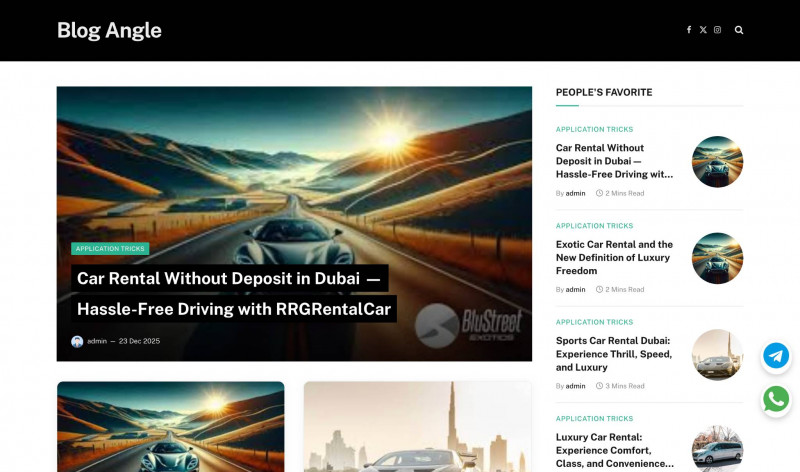
Blog Angle’s homepage gives the impression of variety, but the variety collapses as soon as you look closer. The same themes repeat under slightly different titles. Dubai car rentals appear again and again, sliced into keyword-sized pieces. Health, lifestyle, apps, and business topics show up not because they belong together, but because they are easy to spin into low-effort pages.
The site behaves less like a publication and more like a grid of landing pages that happen to be formatted as blog posts.
There is no narrative across posts. No sense of accumulation. Yesterday’s article does not inform today’s. Tomorrow’s will not build on either. Each page exists independently, optimized to catch a search query and then disappear from the reader’s mind.
The writing is intentionally thin
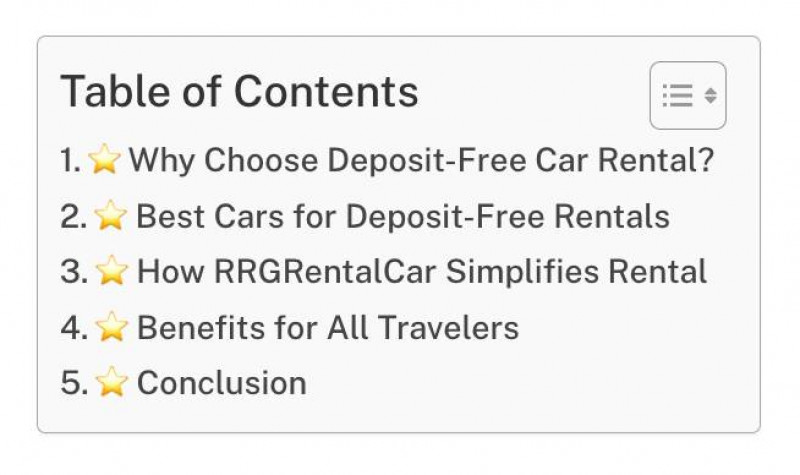
The articles are short, clean, and emotionally neutral. They explain just enough to look legitimate and never enough to be useful.
Claims are made without sources. Costs, policies, and processes are mentioned without verification. The language avoids specifics, numbers, and edge cases. That is not because the authors do not know better. It is because specificity would require accountability.
The tone is not careless. It is evasive.
There is no editorial presence because none is required
Real publications leave fingerprints. You can tell when something has been edited. You can tell when a topic matters to the people publishing it.
Blog Angle leaves no such trace.
There are no visible editors. No consistent authorship standards. No explanation of how topics are selected or reviewed. Contact details exist, but they function as partnership doors, not editorial accountability.
This absence is structural. The site is not designed to argue, investigate, or explain. It is designed to publish.
What the site claims versus how it actually behaves
| Aspect | What a reader is led to expect | What actually happens |
| Topic coverage | Broad, informative blogging | Narrow keyword targeting |
| Articles | Helpful explanations | Surface summaries |
| Categories | Organized subject areas | Loose storage labels |
| Authorship | Human perspective | Anonymous or generic |
| Purpose | To inform | To rank |
This gap is not subtle once you notice it. And once you do, the site becomes predictable.
Commercial signals bleed into everything
Partnership language, promotional phrasing, and monetizable topics are not separated from informational content. They are embedded into the same structure, written in the same voice, and presented with the same authority.
That matters because the site never tells readers when they are being informed and when they are being directed.
The absence of disclosure is not loud. It is quiet, and that quietness is the problem.
Why this qualifies as an SEO farm, not a blog
An SEO farm is not defined by bad grammar or spammy popups. It is defined by intent.
BlogAngle.org shows all the markers:
● High output with low depth
● Repetitive topic framing
● No editorial continuity
● Monetizable keywords prioritized over reader need
● Content that does not expect return visitors
Nothing here is built to last. It is built to be indexed.
Final perspective
BlogAngle.org is not confused, unfinished, or finding its footing. It is operating exactly as intended.
It produces pages, not arguments. It publishes volume, not judgment. It does not want readers who think, return, or challenge what they read. It wants visitors who arrive once through search and leave quietly.
That makes it efficient.
It does not make it credible.
Once you understand that distinction, there is nothing left to debate.



Trending Collections









Popular Tags

Plus Size Work Outfits
32 Posts
School Outfit
280 Posts
Denim Outfits
562 Posts