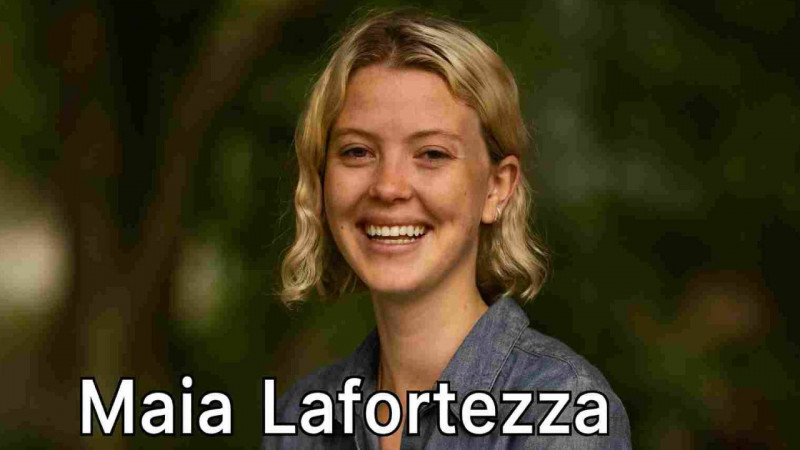
Maia Lafortezza: Understanding a Life and Career Through Presence, Choice, and Restraint

Presence Before Personal History
The name Maia Lafortezza does not appear in the loud, familiar ways many people have come to expect from public figures. There are no constant interviews, no personality-driven social media presence, and no easily packaged “story” that introduces her to the world. Instead, her name surfaces quietly most often in professional or contextual environments rather than entertainment-driven ones.
This kind of presence is increasingly unusual. In a digital culture shaped by visibility, metrics, and self-narration, people are often introduced through biography first: where they were born, what shaped them, how they overcame obstacles. Lafortezza’s public presence skips that stage almost entirely.
What draws attention, then, is not dramatic exposure but measured appearance. Her name appears where it needs to appear and nowhere else. That restraint is not accidental. It shapes how she is perceived and how her career is understood.
Rather than asking “Who is she?” in the traditional sense, a more accurate starting question becomes:
Why does her presence look this way, and what does that tell us about modern professional identity?
Visibility Without Performance
Many people equate visibility with openness. If someone is known, the assumption follows that their life should be legible. Maia Lafortezza’s public footprint challenges that idea.
What is visible:
● Her name appearing in work-related or professional contexts
● Consistent references rather than sudden spikes of attention
● An absence of self-explanatory or autobiographical framing
What is noticeably absent:
● Personal storytelling
● Lifestyle branding
● Emotional or motivational narratives
This balance suggests something important: visibility does not always aim to be understood immediately. In Lafortezza’s case, visibility seems functional rather than expressive. She appears where her work appears, and nowhere else.
That approach changes how curiosity operates. Instead of being guided by pre-written narratives, audiences encounter fragments and must resist the urge to fill gaps with assumptions.
A Life Read Through Decisions, Not Disclosure
When personal information is limited, interpretation shifts. Rather than reading a life through disclosed facts, it becomes necessary to read it through choices.
From what is publicly observable, several decisions stand out:
● Choosing professional presence over personal storytelling
● Allowing work to speak without explanation
● Maintaining a low-volume public footprint
Equally important is what does not appear:
● No visible effort to control perception through branding
● No attempts to clarify identity beyond professional necessity
● No public insistence on relevance or recognition
This does not imply secrecy. It implies selective engagement. In a world where oversharing is often normalized, choosing not to share becomes an act of structure.
Rather than asking what is hidden, a more responsible question is why restraint might be valuable; both personally and professionally.
Career Without the Ladder Metaphor
Careers are often described as ladders:
● Entry
● Growth
● Breakthrough
● Recognition
Maia Lafortezza’s career does not align neatly with this model. There is no visible “before” and “after,” no moment framed as arrival, no narrative of ascent.
Instead, her professional life resembles a pattern:
● Repeated involvement rather than sudden expansion
● Continuity rather than reinvention
● Stability rather than spectacle
This pattern suggests a different kind of professional success, one built on consistency and relevance rather than attention.
Key signals include:
● Sustained association with certain types of work
● Lack of dramatic pivots or rebranding
● Ongoing presence without escalation
This does not mean her career lacks movement. It means movement is horizontal rather than vertical deepening rather than climbing.
The Value of Quiet Professionalism
In many industries, especially outside entertainment, careers operate on trust more than visibility. People are valued because they are reliable, not because they are constantly seen.
Maia Lafortezza’s professional presence aligns with this quieter model.
Such careers often share common traits:
● Recognition happens within specific circles
● Work is referenced rather than promoted
● Longevity matters more than momentum
This type of recognition is harder to measure but often more durable. It does not depend on algorithms or trends. It depends on continued relevance.
Silence, in this context, is not absence. It is focus.
Public Identity and the Right to Remain Undefined
One of the most instructive aspects of Lafortezza’s profile is her apparent refusal to let public identity fully define personal identity.
There is a clear separation between:
● What is publicly necessary
● What is privately held
This boundary matters because modern digital culture often erases it. Many people feel pressure to:
● Explain themselves continuously
● Translate every experience into content
● Justify relevance through exposure
Lafortezza’s public presence suggests an alternative:
● You can participate without performing
● You can contribute without narrating
● You can be visible without being consumed
This does not reduce understanding. It reframes it.
How the Internet Shapes (and Flattens) Understanding
Search engines and content aggregators do not interpret nuance. They collect repetition. For someone like Maia Lafortezza, whose public information is limited and context-driven, this can create distortions.
Common effects include:
● Name repetition without explanation
● Aggregated references stripped of nuance
● Silence misread as insignificance
Here is how different source types typically shape perception:
| Source Type | What It Reveals | What It Obscures |
| Search results | Frequency of name | Intent and meaning |
| Aggregated profiles | Surface associations | Depth of involvement |
| Content databases | Isolated mentions | Full professional scope |
| Limited social presence | Controlled visibility | Personal life |
| Lack of media coverage | Absence of spectacle | Absence of value (incorrect) |
Understanding these limitations is critical. The internet does not reward restraint, but restraint does not equal irrelevance.
Recognition That Doesn’t Need Applause
Recognition often arrives quietly for people who work outside mainstream attention systems.
Instead of awards or headlines, recognition may look like:
● Continued inclusion
● Long-term collaboration
● Professional trust
In such careers:
● Validation is internal or peer-based
● Visibility is situational
● Silence supports longevity
Maia Lafortezza’s public footprint aligns with this model. Her name persists not because it is pushed, but because it remains relevant where it matters.
This kind of recognition is difficult to narrate but easy to sustain.
What Is Known and What Remains Private
Separating confirmed signals from private or unknown areas helps prevent speculation.
| Confirmed Signals | Private or Unknown |
| Professional involvement | Personal background |
| Consistent public restraint | Motivations |
| Work-focused presence | Family details |
| Absence of self-promotion | Future plans |
| Ongoing relevance | Non-public achievements |
This division is not a flaw. It is a boundary.
The Broader Meaning of a Profile Like This
Maia Lafortezza’s public presence represents a growing but under-discussed reality: not all meaningful careers are loud.
Her profile challenges several common assumptions:
● That visibility equals importance
● That transparency is mandatory
● That identity must be constantly explained
Instead, it suggests:
● Presence can be selective
● Work can speak without commentary
● Privacy can coexist with public contribution
In an environment that often mistakes exposure for value, her approach feels grounded rather than evasive.
Closing Perspective
This is not a story with a neat conclusion, and that is intentional.
Maia Lafortezza’s life and career cannot and should not be fully summarized by public fragments. What can be understood is the shape of her presence, not the contents of her private life.
Her profile reminds us that:
● Not all lives are meant to be fully legible
● Not all careers need a narrative arc
● Understanding sometimes means accepting limits
Rather than asking for more information, the more respectful response is to recognize what her public presence already communicates: intentionality, focus, and restraint.
And in a culture built on constant explanation, that restraint may be the clearest signal of all.



Trending Collections









Popular Tags

Plus Size Work Outfits
32 Posts
School Outfit
280 Posts
Denim Outfits
562 Posts